Indoor Air Quality Testing and Filter Solutions
 Andrew
September 16, 2026
#airfilters
#furnacefilters
#HVAC
#hvacfilters
#iaq
#indoorairquality
#MERV
#PM2.5
Andrew
September 16, 2026
#airfilters
#furnacefilters
#HVAC
#hvacfilters
#iaq
#indoorairquality
#MERV
#PM2.5
- Indoor air can be 2-5 times more polluted than outdoor air, with pollutants ranging from harmless dust to lethal gases like radon and carbon monoxide.
- Simple tools like IAQ monitors and DIY test kits provide quick screening, while professional testing offers comprehensive analysis when health concerns warrant it.
- High-risk pollutants like radon and carbon monoxide require specialized detectors and mitigation because HVAC filters cannot address these gases.
- HVAC filters in MERV 8–13 are your first line of defense for everyday air quality
What Factors Affect Your Indoor Air Quality?
Indoor air quality (IAQ) depends on multiple factors. Homeowners, renters, and business owners addressing air quality can handle many everyday issues with simple air filter furnace replacements while others require specialized monitoring or professional intervention.
The table below outlines common indoor air quality concerns and solutions:
| Air Quality Concern | Solution or Test | Notes |
|---|---|---|
| Particulate Matter (PM2.5) | IAQ monitor, MERV 8–13 HVAC filters | Most common concern; filters capture pollen, dust, pet dander, mold spores effectively |
| Mold | Visual inspection or professional testing | Thrives in damp areas; address moisture source; HVAC filters help with airborne mold spore control |
| Carbon Monoxide (CO) | CO detectors with digital displays | Life-threatening gas from combustion appliances; professional-grade units detect low levels |
| Radon | DIY test kits ($10-$50) or professional testing | Second leading cause of lung cancer; EPA action level 4 pCi/L; test basement/first floor |
| Outdoor Air Pollution | Check AirNow.gov + close windows during high pollution days | Wildfire smoke and industrial pollution enter through ventilation; MERV 13 is a helpful air filter for smoke |
| Humidity | IAQ monitor, smart home devices, hygrometer; humidifier or dehumidifier | Ideal range 30–50%; too high promotes mold, too low irritates respiratory system |
| Volatile Organic Compounds (VOCs) | IAQ monitors + home cleanup | Released by paints, cleaners, new furniture; ventilation reduces levels |
Critical pollutants like radon and carbon monoxide require dedicated detectors because they're colorless, odorless, and potentially lethal. Radon seeps through foundation cracks from soil below and causes approximately 21,000 lung cancer deaths annually in the U.S. Carbon monoxide from malfunctioning furnaces or gas appliances can be fatal within hours. HVAC filters cannot capture gases. Only specialized detectors protect against these threats and radon requires special mitigation.
For more information on radon testing and mitigation, visit the EPA's radon guidance. Carbon monoxide detector recommendations and safety information are available through the Consumer Product Safety Commission.
Testing Tools: From DIY Monitors to Professional Analysis
Indoor home air quality testing ranges from inexpensive DIY approaches to comprehensive professional assessments. Home IAQ monitors provide real-time data on multiple pollutants through desktop units or smartphone-connected devices. Available models track PM2.5, VOCs, CO₂, humidity, and temperature, with prices ranging from $50 to over $300.
DIY test kits offer single-pollutant screening at a lower cost. Radon test kits ($10–$50) placed in basements for a few days provide initial screening while long-term tests (90+ days) give more accurate exposure assessment. Mold test kits and VOC screening tools are also available, though their accuracy varies. Of course, visually inspecting for mold is also useful, and pay attention for persistent, musty odors.
Professional indoor air quality testing ($300–$1,000) becomes worthwhile if health symptoms develop and persist, after major renovations, or when planning significant remediation work. Professionals use calibrated equipment to measure pollutant concentrations precisely and provide actionable remediation recommendations. This investment makes sense when respiratory issues, unexplained headaches, or chronic fatigue might link to indoor air quality.
HVAC Filters: Your First Line of Defense for Everyday Air Quality
While specialized tests and monitors address serious concerns like radon and carbon monoxide, your home's existing HVAC system offers powerful protection against the most common indoor air pollutants.
What MERV rating is best?
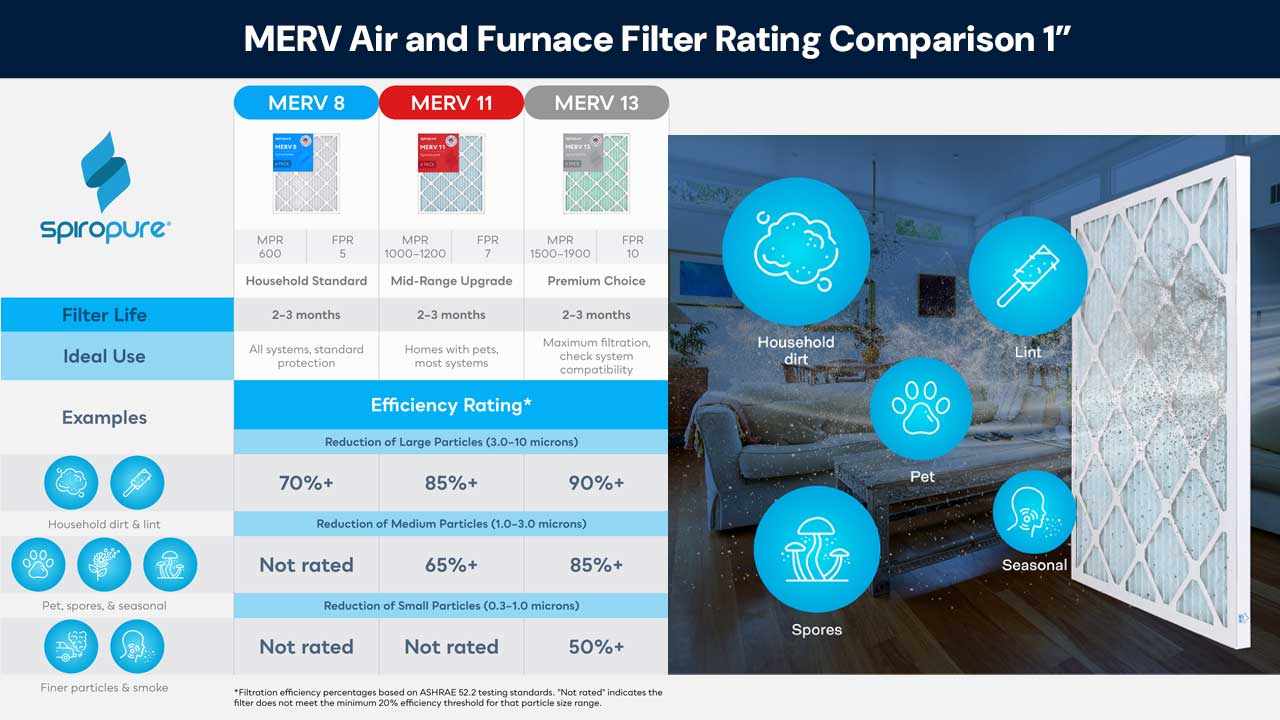
- MERV 8 offers standard protection with good filtration of dust, lint, and a range of mold spores and pollen, at 70% to 85% efficiency for particles 3.0–10.0 microns in size. It is important to understand that MERV 8 is vastly superior to cheaper filters designed only to protect your HVAC system and is a great starting point.
- MERV 11 filters are an upgrade choice to handle everyday air quality for most homes. These filters capture 85% or better of particles between 3.0 and 10 microns, including pollen, mold spores, pet dander, dust mite debris, and more.
- For households with multiple pets, allergies, or asthma, MERV 13 filters provide superior protection by capturing 90% or better of larger particles plus up to 50% of particles as small as 0.3 microns. Of the three, MERV 13 is the top air filter for smoke that is still within capacity for most modern HVAC units.
But the critical factor isn't just the MERV rating. It's regular replacement.
Filters clogged with captured pollutants restrict airflow, reduce filtration efficiency, and strain your HVAC system. Replace 1" and 2" filters at least every 90 days for optimal performance, or every 60 days in homes with pets or during high-pollen seasons. 4" and 5" filters can last 6 months to a year. Set reminders and keep to the schedule.
Before upgrading to higher MERV ratings, verify your HVAC system can handle increased airflow resistance. Older systems not designed for high-efficiency filters may experience reduced performance or equipment damage. Check your system's documentation or consult an HVAC professional to determine the maximum recommended MERV rating.
For comprehensive guidance on choosing the right filter efficiency for your home, read our Air Filter MERV Rating Guide. Understanding which pollutants you're targeting helps match the filter to your specific air quality needs.
Browse our selection of whole house air filters in MERV 8, 11, and 13 ratings to find the right fit for your HVAC system. Quality SpiroPure filters from All Filters ship free and arrive ready to install, making it simple to take control of your indoor air quality today.
FAQs on Indoor Air Quality Testing
How often should I test my home's indoor air quality?
What's the difference between a DIY IAQ monitor and professional testing?
Can HVAC filters remove carbon monoxide and radon?
Which MERV rating is best for improving indoor air quality?
How do I know if my indoor air quality is causing health problems?
RELATED PRODUCTS

1" AC & Furnace Air Filters
Standard and custom sizes to get the right fit for your HVAC or furnace system.
Cleaner, fresher air in your home!
Free Shipping & MORE savings with Case Packs!

2" AC & Furnace Air Filters
2-inch thick air filters in standard and custom sizes for geothermal, AC, furnace, HVAC systems and more!
Efficient, Effective Air Filtration
Save MORE with Super Value Case Packs!

4" AC & Furnace Air Filters
Find 4" thick air filters in standard and custom sizes for your home HVAC or furnace system!
Breathe fresher, cleaner air at home!
BIG Savings with Case Packs!