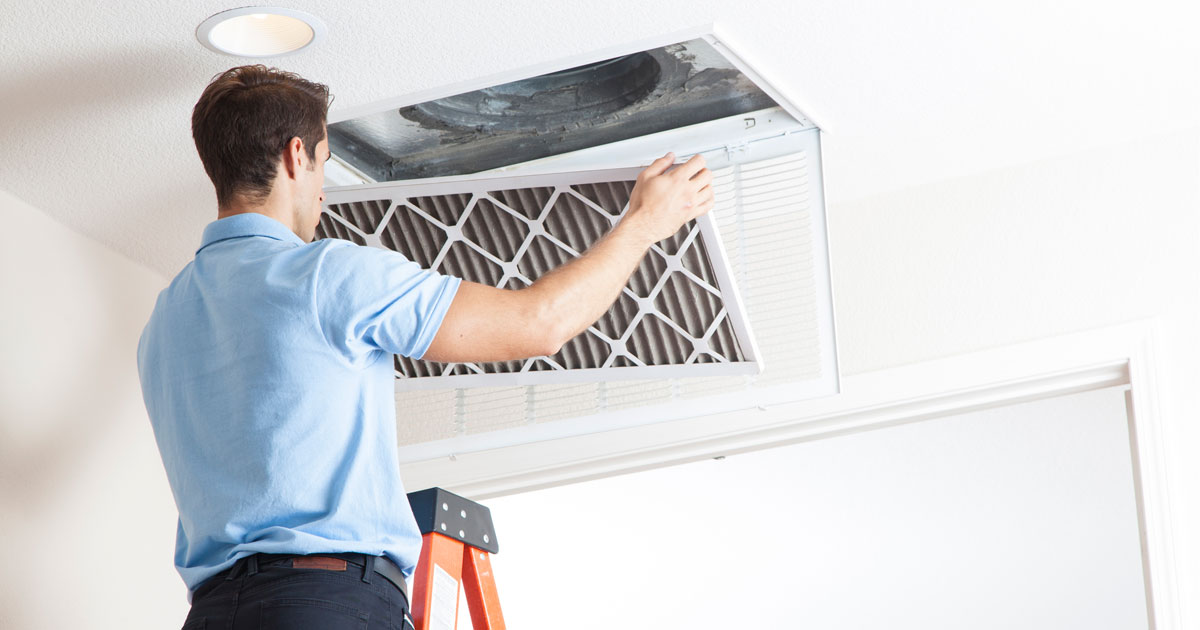
Furnace Filter Installation: A Step-by-Step Guide
 Andrew
April 02, 2026
#HVAC
#hvacfilters
#installationguide
#mervrating
Andrew
April 02, 2026
#HVAC
#hvacfilters
#installationguide
#mervrating
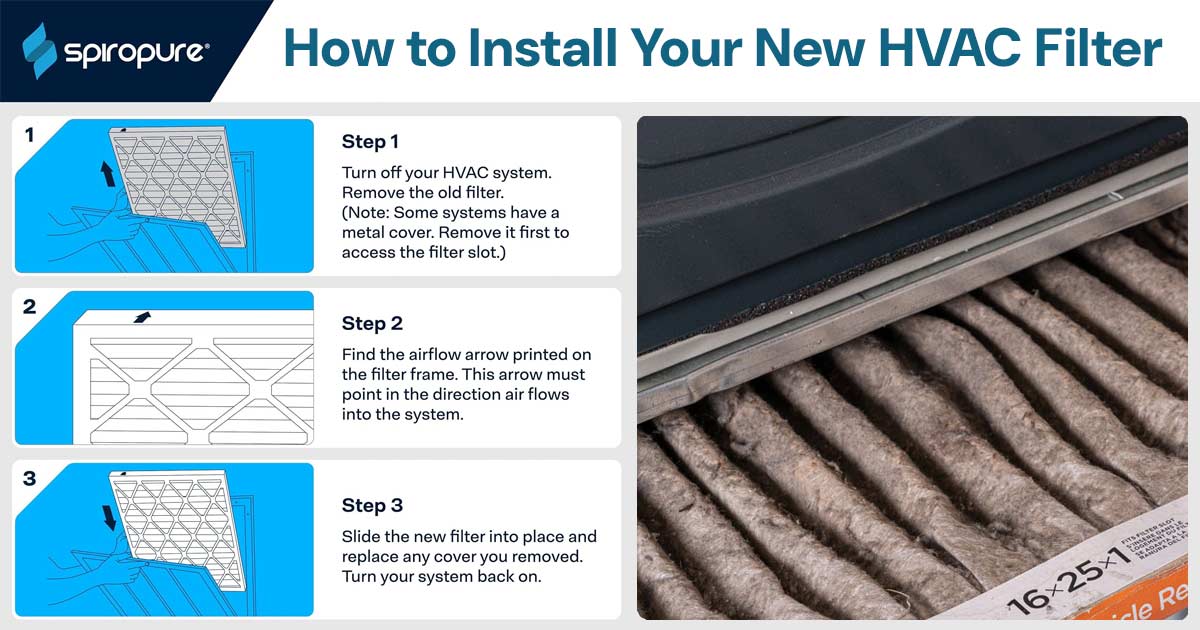
- Follow our straightforward five-step process for installing a furnace filter correctly, from powering down your system to restarting it safely
- Learn why proper installation matters for HVAC efficiency, energy costs, and indoor air quality
- Avoid the most common installation mistakes that reduce filter performance and potentially damage your system
Installing a furnace filter is among the simplest maintenance tasks a homeowner can perform, yet when speaking with our customers, we regularly learn of filters installed backward, forced into the wrong-sized compartments, or skipped entirely during routine upkeep. At our U.S. manufacturing facility, we engineer filters that deliver improvements in indoor air quality, but those benefits disappear when something goes wrong with installation. A correctly installed filter protects your HVAC system, reduces energy consumption, and captures the airborne particles that affect your family's health, from dust and pet dander to mold spores and smoke. This guide walks you through the exact process our team follows when installing furnace filters in residential systems.
Step-by-Step Guide to Installing a Furnace Filter
Furnace filter installation requires no specialized tools and typically takes less than five minutes when you follow the correct sequence. We've broken the process into a few clear steps that ensure proper alignment, secure fit, and optimal airflow through your HVAC system.
Turn Off Your Furnace
Turn off your furnace. Most contemporary HVAC installations have a switch like a light switch. This step prevents the blower from activating while the filter compartment is open, which protects both you and the equipment. Some systems have a circuit breaker dedicated to HVAC equipment. If your furnace lacks a visible switch, flip that breaker instead.
Locate the Filter Compartment
The filter compartment sits between the return air duct and the blower. In most residential furnaces, you'll find it behind a panel on the furnace's lower section or along the return duct near the unit. Slide or lift the access panel away to expose the filter slot. Some furnaces secure the panel with screws or clips. Bring a large mug or reusable container to keep track of any loose components. No need to lose time searching for a screw that wandered off and neglected to say where it was going or when it would be home.
Remove the Old Filter
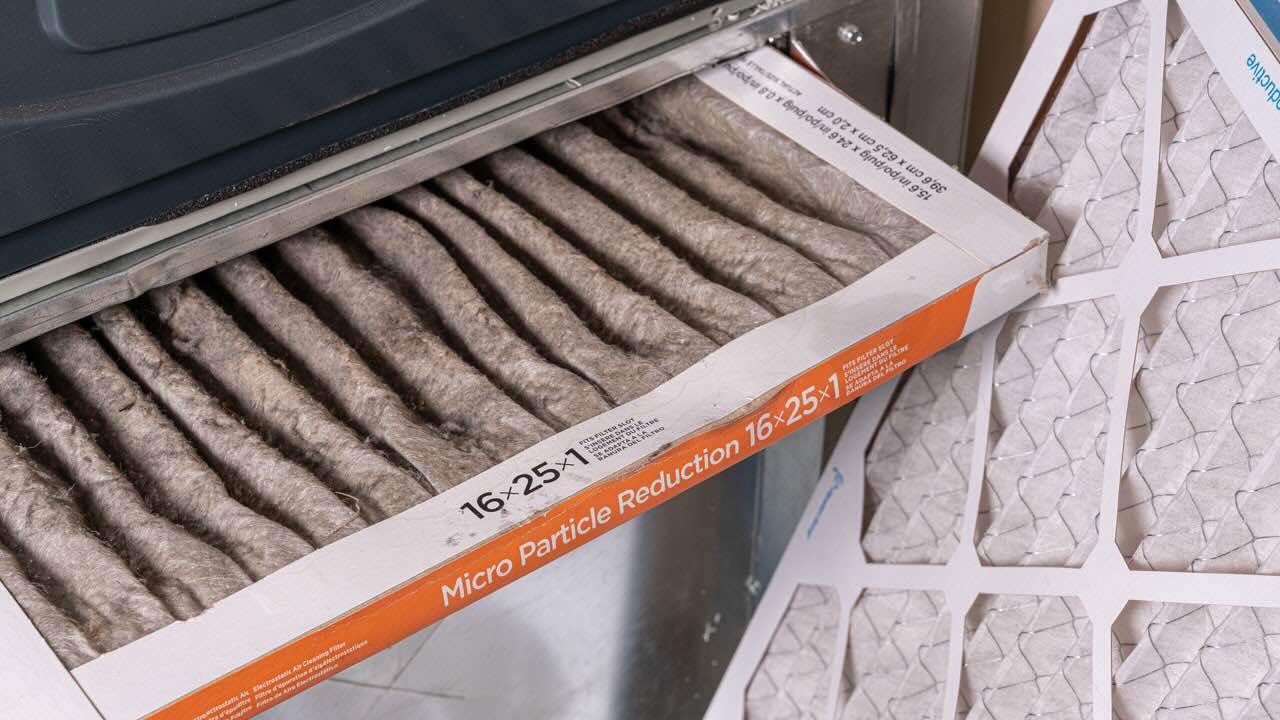
Slide the old filter straight out of the compartment, noting its orientation before removal. Check the filter's condition to see if it's clogged with dust or shows visible discoloration. That's a clear sign it's overdue for replacement. Throw the old filter away. (If you're using a washable filter, clean it according to the manufacturer's specifications before reinstalling and be very careful to ensure the filter is completely dry. Overlooking this process can lead to mold growth.)
Insert the New Filter Correctly
Every filter has an airflow direction arrow printed on its frame. This arrow must point toward the blower and away from the return duct. Align the filter with the compartment's dimensions and slide it into place until it sits flush against the back of the slot. The filter should fit snugly without gaps along the edges. Gaps allow unfiltered air to bypass the media entirely. For guidance on selecting the correct filter size, refer to our complete sizing and replacement guide.
Close the Compartment and Turn On the Furnace
Replace the access panel and secure any screws or clips you removed earlier. Return to the power switch or circuit breaker and restore power to the furnace. Listen for the blower to start. It should operate smoothly without unusual noise or vibration. If you notice whistling or rattling, power down again and verify the filter is seated correctly.
The Importance of Proper Furnace Filter Installation
A filter installed backward forces air through the media in the wrong direction, collapsing the pleats and reducing particle capture efficiency. When air bypasses a poorly fitted filter through gaps along the frame, dust accumulates inside the blower assembly, on heat exchanger surfaces, and throughout your ductwork. These contaminants reduce system efficiency, increase energy consumption, and shorten equipment lifespan. We design our filters and cut them to order (It's true: filters are made to order, so double check you are ordering the correct size!) to prevent bypass when installed correctly. Proper installation ensures you receive the full performance our engineering team built into each filter.
Common Furnace Filter Installation Mistakes to Avoid
Even straightforward tasks develop patterns of error. Here are the four mistakes we see most often and how to avoid them.
- Using an incorrect filter size creates gaps that allow unfiltered air into your system. Always verify your filter compartment's dimensions before ordering. Forcing a too-large filter damages both the filter frame and the compartment. Our sizing guide explains how to measure accurately.
- Installing the filter backward is the most common error. The airflow arrow must point toward the blower. If you're uncertain which direction air flows in your system, the return duct pulls air in, and the blower pushes air out, so the arrow follows that path.
- Low-quality or incompatible filters provide inadequate filtration or create excessive airflow resistance. We recommend staying within the MERV 8 to MERV 13 range for residential systems. For help selecting the appropriate efficiency level, review our MERV rating guide.
- Neglecting regular replacement allows filters to clog, which forces your blower motor to work harder and increases energy costs. Replace 1-inch and 2-inch filters every 60 to 90 days. Thicker 4-inch and 5-inch filters last six months to a year, depending on household conditions.
FAQs on Furnace Filter Installation
How do I know which way to install a furnace filter?
Can I install any type of filter in my furnace?
What happens if I install the furnace filter incorrectly?
How often should I change my furnace filter?
Why is my furnace not working after installing a new filter?
RELATED PRODUCTS
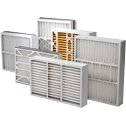
AC & Furnace Filters
Residential and commercial air filters for air conditioning, geothermal, furnaces, and more!
Breathe Better in Your Home!
Save BIG on Case Packs

4" AC & Furnace Air Filters
Find 4" thick air filters in standard and custom sizes for your home HVAC or furnace system!
Breathe fresher, cleaner air at home!
BIG Savings with Case Packs!

1" AC & Furnace Air Filters
Standard and custom sizes to get the right fit for your HVAC or furnace system.
Cleaner, fresher air in your home!
Free Shipping & MORE savings with Case Packs!