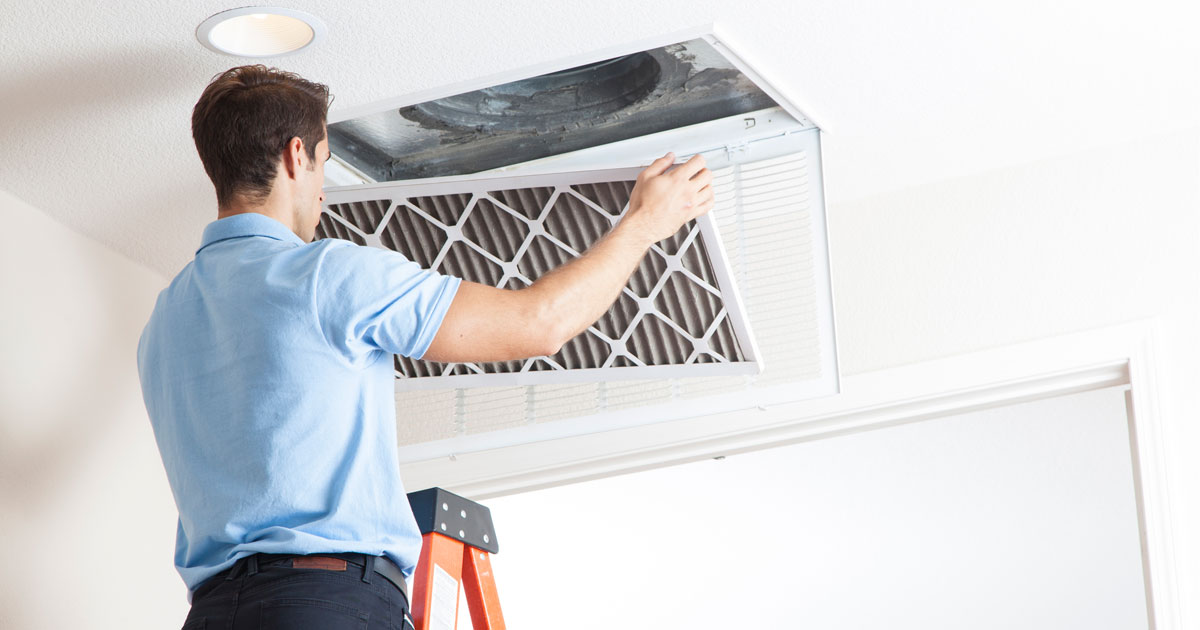
What Does MERV Mean in Air Filters: A Complete Guide
 Andrew
June 18, 2026
#airfilters
#furnacefilters
#HVAC
#MERV
#mervrating
Andrew
June 18, 2026
#airfilters
#furnacefilters
#HVAC
#MERV
#mervrating

- Learn what MERV means and how the standardized 1–20 scale measures a filter's ability to capture particles
- Discover why MERV 8 to 13 is the recommended range for most homes, balancing effective particle capture with your HVAC system's airflow requirements
- Understand why a higher MERV rating isn't always better and how choosing the wrong rating can damage your system
Indoor air quality rarely receives the attention it deserves until seasonal allergies begin or dust starts to settle on every surface. Most homeowners understand that a filter is a vital part of their heating and cooling system. But the technical specifications of these components are often overlooked. We witness the importance of precision engineering every day at our U.S. manufacturing facility. There, we produce high-performance filtration solutions. One specific metric dictates the effectiveness of a filter more than any other. This is the MERV rating. We have simplified these technical benchmarks to help you identify the precise level of filtration required for a cleaner and healthier home.
Understanding MERV Ratings and the MERV Rating Chart Explained
What does MERV mean in air filters? MERV stands for Minimum Efficiency Reporting Value. It is a standardized measurement developed by ASHRAE, the American Society of Heating, Refrigerating and Air-Conditioning Engineers, that tells you precisely how effective a filter is at capturing airborne particles of specific sizes. The higher the MERV rating, the smaller the particles the filter can trap.
For the 3.0 to 10.0 micron particle range (which includes a range of dust, mold spores, and pollen particles), MERV 8 captures at least 70%, MERV 11 captures at least 85%, and MERV 13 filter captures 90% or more of those airborne particles. MERV 11 adds 65% or greater efficiency for particles sized 1.0–3.0 microns, and MERV 13 hits 85%+ efficiency in that range and 50% efficiency for tiny particles 0.3–1.0 microns. 50% doesn't sound like a lot, but be aware that is reaching into HEPA territory and the density of the filtration media is high enough that some residential systems cannot handle it.
The MERV scale runs from 1 to 20. Ratings at the lower end capture large, visible debris like carpet fibres and dust. Ratings at the upper end approach HEPA-grade performance, capturing microscopic particles, including bacteria and combustion smoke. HVAC systems in most American households are not equipped to handle HEPA filtration, which is MERV 17 and above. Each step up the scale represents a tested increase in particle capture efficiency across three particle size ranges, as defined by ASHRAE Standard 52.2. These ratings represent verified tests, not manufacturing marketing. But be aware that particles vary in size and don't fit neatly into a given range.
| MERV Rating | Particle Size Reach | Particles Targeted | Typical Application |
|---|---|---|---|
| 1 to 4 | Greater than 10 microns | Carpet fibers, dust mites | Basic residential, window units |
| 5 to 8 | 3 to 10 microns | Mold spores, pet dander, dust | Standard residential HVAC |
| 9 to 12 | 1 to 3 microns | Fine dust, auto-emission particles | Superior residential, light commercial |
| 13 to 16 | 0.3 to 1 micron | Bacteria, tobacco smoke | Commercial buildings, hospital areas, some high-efficiency modern residential HVAC |
| 17 to 20 (HEPA) | Less than 0.3 microns | Viruses, combustion smoke | Clean rooms, surgical suites (not suitable for most homes) |
What is the Recommended MERV Rating for Home Use?
For most residential HVAC systems and furnace filters, we recommend staying within the MERV 8 to 13 range. This window reflects the balance between meaningful particle capture and the airflow demands of a standard residential blower motor.
- A MERV 8 filter handles the particles that affect most households daily. Dust, pet dander, pollen, and mold spores are all captured reliably at this rating. It is the floor of genuinely effective residential filtration.
- Moving up to a MERV 11 or MERV 13 adds the ability to capture fine particulate matter, smoke particles, and submicron allergens that trigger asthma and respiratory sensitivity. These ratings suit homes with pets, allergy sufferers, or anyone in areas with elevated outdoor air pollution. Read more about the best air filters for allergies.
Recommended MERV Ratings for Different Air Filter Applications
The MERV rating shifts considerably depending on the environment the filter serves. Below is our practical guidance by application type.
- Standard Residential Use: MERV 8 to MERV 10 covers the filtration needs of a typical home with no specific health concerns. It captures the particles responsible for most household dust accumulation and standard seasonal allergens without straining the blower.
- Allergy and Asthma Sufferers: We recommend MERV 11 to MERV 13 for households where one or more occupants have respiratory sensitivities. Our MERV efficiency resource provides a full technical breakdown of capture rates at each rating tier.
- Light Commercial Spaces: Environments with higher foot traffic or shared air handling benefit from MERV 11 to MERV 13. These ratings address the fine particulate matter that increased occupancy introduces into the air.
- Commercial and Industrial Facilities: MERV 13 to MERV 16 is standard in commercial applications where regulatory compliance and occupant health are formal responsibilities. MERV 17 and above moves into HEPA territory, reserved for clean rooms, pharmaceutical floors, and surgical environments where contamination control is mission-critical.
Understanding MERV ratings across these applications allows our team to match the right filter to each environment.
FAQs: What Does the MERV Rating Mean in Air Filters?
What is the Best MERV Rating for Home Use?
How Does a Higher MERV Rating Affect Air Filters?
Is a Higher MERV Rating Always Better for Home HVAC Systems?
Are MERV Ratings the Same for All Types of Air Filters?
What is the MERV Rating for Furnace Filters?`
RELATED PRODUCTS

1" AC & Furnace Air Filters
Standard and custom sizes to get the right fit for your HVAC or furnace system.
Cleaner, fresher air in your home!
Free Shipping & MORE savings with Case Packs!

2" AC & Furnace Air Filters
2-inch thick air filters in standard and custom sizes for geothermal, AC, furnace, HVAC systems and more!
Efficient, Effective Air Filtration
Save MORE with Super Value Case Packs!

4" AC & Furnace Air Filters
Find 4" thick air filters in standard and custom sizes for your home HVAC or furnace system!
Breathe fresher, cleaner air at home!
BIG Savings with Case Packs!