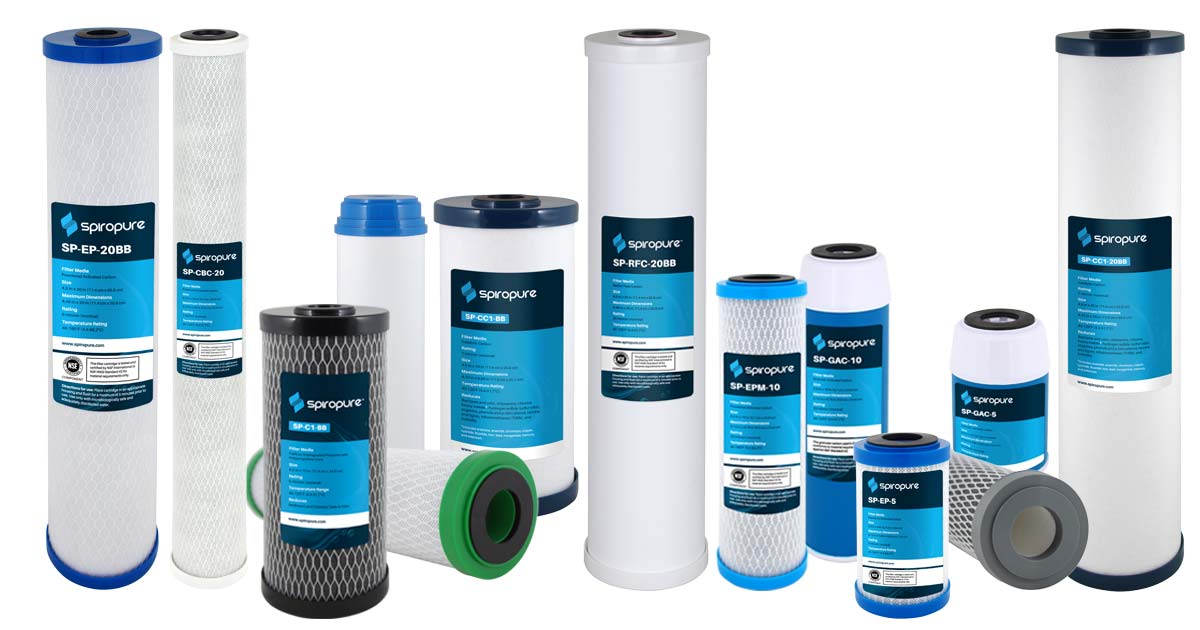
Catalytic Carbon Water Filters: Guide to Removing Chloramine and Sulfur Smell
 Andrew
August 04, 2026
#carbonfilter
#catalyticcarbon
#chloramines
#hydrogensulfide
Andrew
August 04, 2026
#carbonfilter
#catalyticcarbon
#chloramines
#hydrogensulfide
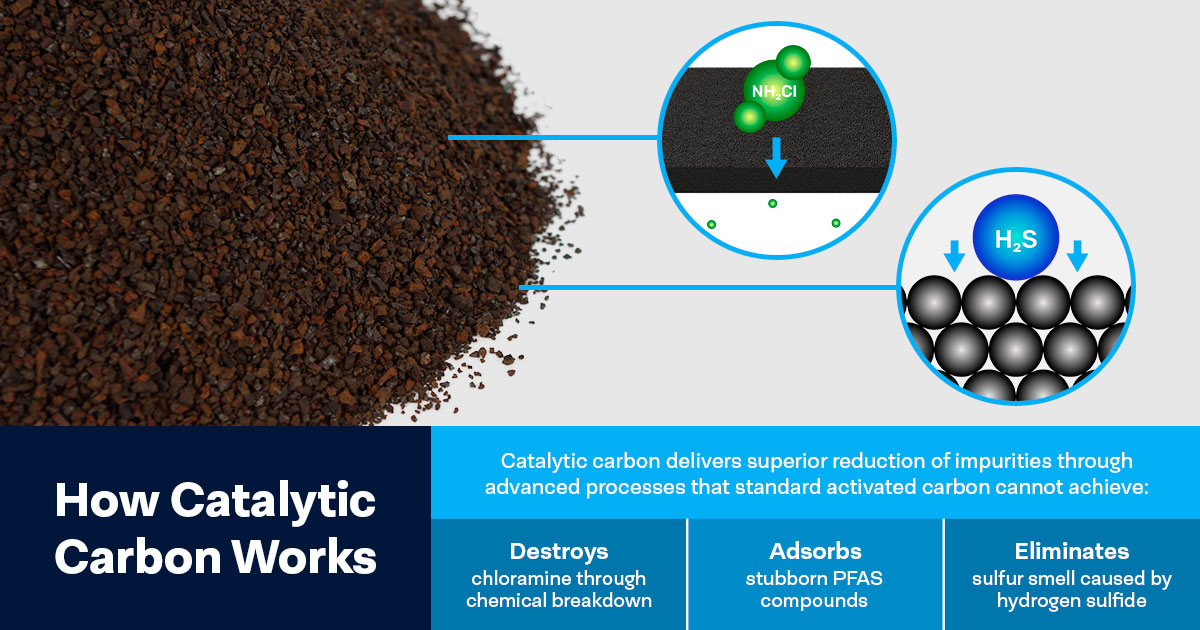
- Catalytic carbon uses enhanced surface chemistry to break down chloramines through catalytic decomposition, not just adsorption
- Most catalytic carbon comes in granular (GAC) form because converting it to carbon block can significantly reduce catalytic activity
- Primary uses for households include removing chloramine from municipal water and hydrogen sulfide (rotten egg smell) from well water
Catalytic carbon just sounds impressive. The name evokes a sense of power and action, and in this case, it's not just marketing. Catalytic carbon is a truly impressive filtration medium. While it is also an activated form of carbon filter, additional chemical processing creates special properties that enable it to tackle contaminants through catalytic breakdown rather than typical adsorption alone. We'll explain that a little more in a bit.
While catalytic carbon has a number of uses, many homeowners in America turn to catalytic carbon filters for one of two primary purposes: removing chloramine from city water or eliminating that notorious rotten egg smell from well water.
What is Catalytic Carbon
Catalytic carbon is activated carbon that has undergone surface modification through high-temperature nitrogen gas processing. This treatment creates special reactive sites on the carbon surface that chemically break down contaminants instead of just trapping them. It's similar to how a car's catalytic converter breaks apart toxic exhaust gases into less harmful byproducts.
Unlike standard activated carbon that relies primarily on physical adsorption (trapping contaminants on the surface), catalytic carbon breaks down certain contaminants through chemical decomposition. For example, when the water treatment chemical chloramine's molecules contact catalytic carbon's reactive sites, they decompose into harmless chloride and nitrogen rather than merely sticking to the carbon surface.
Why Granular Form Dominates
If carbon block filters generally outperform granular activated carbon (GAC) for contaminant removal, why does catalytic carbon almost always come in granular form? The answer is straightforward: the granular format best preserves the catalytic properties that make this carbon special.
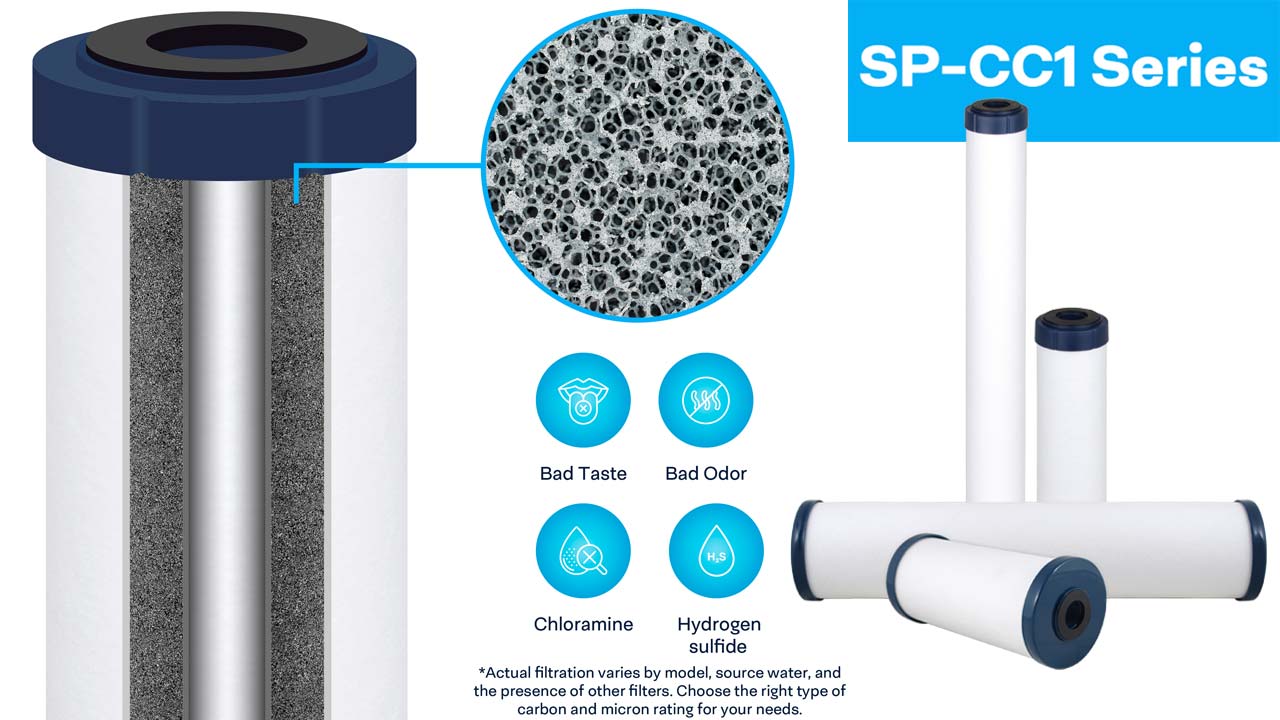
Most catalytic carbon filters use granular activated carbon to maintain maximum catalytic performance. SpiroPure's SP-CC1 series uses high-quality granular catalytic carbon with a nominal 1-micron rating. The rating is significantly higher than the 20-micron nominal rating given to most GAC products. This finer granular structure provides more contact time between water and carbon while preserving the reactive sites needed for chloramine breakdown.
Some manufacturers have developed catalytic carbon blocks, but these remain less common in the market in part because chloramine can exhaust the media much more quickly than than chlorine. The majority of catalytic carbon products rely on the proven performance of granular form.
Best Uses of Catalytic Carbon Filter
Catalytic carbon excels in specific applications where standard activated carbon struggles:
Primary applications:
- Chloramine removal from municipal water – More than 20% of Americans receive water treated with chloramines, which standard carbon removes inefficiently
- Hydrogen sulfide elimination – Removes the rotten egg smell caused by sulfur bacteria when using a catalytic water filter system for well water to drive oxidation.
- Enhanced VOC reduction – Breaks down certain volatile organic compounds that resist standard carbon filtration
- Trihalomethanes (THMs) management – Reduces disinfection byproducts more effectively than regular activated carbon
Important notes about the effectiveness of catalytic carbon water filters on PFAS and heavy metals:
- PFAS reduction capability depends on proper system sizing, flow rate, and water quality characteristics. While catalytic carbon is a good choice for addressing PFAS, not all catalytic carbon removes all forms of PFAS completely.
- Heavy metals are also not a default benefit, as they present unique filtration challenges that require particular conditions, NSF-certified capability, or specific media (such as carbon block or ion exchange) to manage effectively, particularly at high levels.
Which Catalytic Carbon Water Filters Do I Need
For most residential and light commercial applications, standard water filter cartridges provide effective catalytic carbon filtration. The SpiroPure SP-CC1 series comes in common housing sizes:
- 10-inch slim – 2.5" diameter for point-of-use applications or lower flow, low volume households
- 20-inch slim – for extended filter life in 2.5" diameter housing
- 10-inch "Big Blue" style – 4.5" diameter for whole-house systems with moderate flow needs
- 20-inch "Big Blue" style – 4.5" diameter for large households or light commercial applications
For larger whole-house systems treating high volume, high-contaminant load water sources, manual and automatic backwashing catalytic carbon tanks are available through specialized water treatment dealers. These systems use cubic feet of loose catalytic carbon media and require professional sizing based on household water consumption, contaminant levels, and specific treatment goals.
Reverse osmosis systems can provide protection against chloramine as well, even with regular activated carbon pre-filters, which helps to break the chemical bond allowing the carbon to work on the chlorine and the membrane to work on the ammonia. But be aware that high levels of chloramines in water may require frequent membrane changes or whole-house filtration before the RO. For clean water on the go, SpiroPure's RV water filter called the SP-RV100 for recreational vehicles stands out from the crowd by using catalytic carbon (as well as a third-stage descaler media).
So, do you need a catalytic carbon water filter or will another type of carbon filter get the job done? As always, your first step is to check your municipal water utility's annual water quality report (called a Consumer Confidence Report—learn how to find and read one here) to determine if your water contains chloramines. And if you're on a well, test annually regardless of having a telltale sulfur smell, as other contaminants could emerge. In both cases, catalytic carbon provides the specialized filtration that standard activated carbon simply cannot achieve.
RELATED PRODUCTS
Carbon Filter Cartridges
NSF-certified carbon water filters available in a variety of sizes, media, and micron ratings!
Improve Water Taste and Odor!
Save Even More with Case Packs!
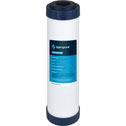
SpiroPure SP-CC1-10 10x2.5 Catalytic Carbon Filter
List Price: $66.36
Our Price: $33.18
Save: $33.18
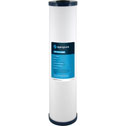
SpiroPure SP-CC1-20BB 20x4.5 Catalytic Carbon Filter
List Price: $171.82
Our Price: $85.91
Save: $85.91