Best HVAC Air Filter for Homes With Pets: Top Picks
 Andrew
April 20, 2026
#allergies
#dander
#MERV
#MERV11
#MERV13
#mervrating
#pets
Andrew
April 20, 2026
#allergies
#dander
#MERV
#MERV11
#MERV13
#mervrating
#pets

- Understand how MERV ratings affect your home's ability to capture pet dander and allergens
- Learn the key factors to consider when selecting filters for homes with dogs, cats, or other pets
- Compare HEPA and MERV-rated options to find the right balance of filtration efficiency and system compatibility
Pet ownership transforms your relationship with your HVAC system. We hear from customers constantly about the visible difference their dogs and cats make in filter condition. What used to be a quarterly replacement task becomes almost a monthly ritual when fur, dander, and tracked-in dirt enter the equation (and then the ducts).
But as pet people, we understand that our monsters are family members who happen to shed year-round and generate airborne allergy triggers in roughly 10 to 20 percent of the population. Selecting the right furnace air filters for pet owners means balancing capture efficiency against system compatibility while accepting the fact that your filter might be working harder and clogging faster than in pet-free homes, whatever those are.
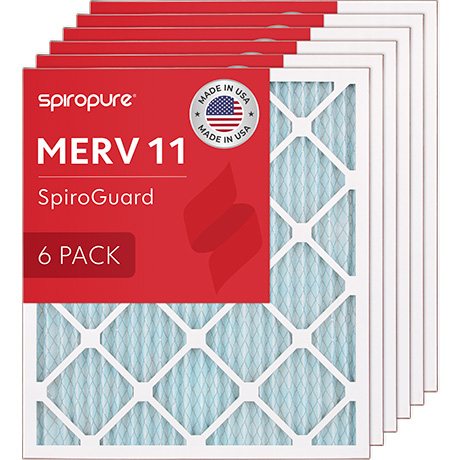
16x18x1 MERV 11 AC & Furnace Filters (6 Pack)
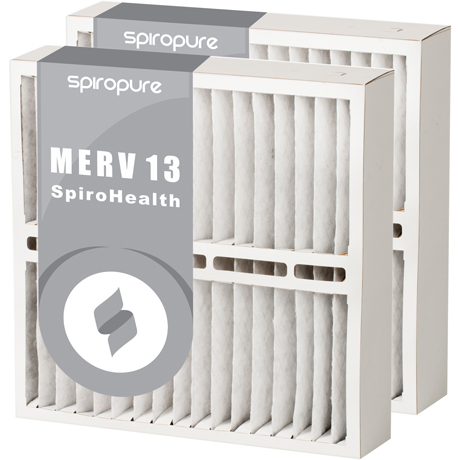
MERV 13 Trane Perfect Fit "BAYFTAH26M" Compatible Air Filters (2 Pack)
How MERV Ratings Affect Air Quality in Homes with Pets
MERV (Minimum Efficiency Reporting Value) ratings measure a filter's ability to capture particles in specific size ranges, and pet-related contaminants span multiple zones on that scale. Dander is the microscopic skin flakes that actually trigger most pet allergies, and they measure around 2.5 to 10 microns. Pet hair itself ranges much larger, from 20 to 100 microns depending on breed and coat type. The proteins that cause allergic reactions bind to dander particles and become airborne as pets groom themselves, releasing clouds of allergen-carrying particles into your home's air like a fog machine in a psychological thriller.
MERV 8 filters capture 70 to 85 percent of particles in the 3 to 10 micron range, which handles larger pet dander and provides noticeable improvement over basic fiberglass filters. MERV 8 represents adequate protection for your HVAC equipment and moderate air quality improvement. However, MERV 8 allows finer dander particles and allergen-carrying fragments to pass through.
MERV 11 increases capture efficiency to 85 percent or greater in the 3 to 10 micron range and adds 65 percent efficiency for particles between 1 and 3 microns. This extended capture range traps the fine dander particles that MERV 8 filters miss, making MERV 11 the recommended baseline for most homes with pets.
MERV 13 delivers 90 percent or greater efficiency for larger particles plus up to 50 percent capture of particles as small as 0.3 microns. This rating provides the highest level of filtration compatible with standard residential HVAC systems and significantly reduces airborne allergens for households with multiple pets or severe allergy sufferers. Before upgrading to MERV 13, verify your furnace can handle the increased airflow resistance. For detailed efficiency specifications, see our complete MERV rating guide.
What to Consider When Buying Furnace Filters for Homes With Pets
Selecting the best HVAC air filter for a home with pets requires attention to factors beyond basic MERV ratings. The right filter balances efficiency, compatibility, cost, and maintenance demands specific to your situation.
Size
Measure your filter compartment precisely before ordering. A filter that's too small allows unfiltered air to bypass the media entirely through gaps along the edges, which means pet dander flows directly into your ductwork regardless of filter efficiency. Verify both nominal size (the number printed on your old filter's frame) and actual dimensions, as these sometimes differ. Custom sizing is available for non-standard compartments and we cut filters to order for hundreds of dimension combinations that big-box stores don't stock.
Price
Pet owners will replace filters more frequently than the average household, which makes cost per filter a genuine consideration. Buying in bulk quantities significantly reduces per-unit cost than buying one at a time at the hardware store. For some, the performance difference between MERV 11 and MERV 13 justifies the price premium when allergies are a concern, but MERV 11 delivers excellent value for general pet dander control.
Maintenance
Pet ownership accelerates filter replacement schedules dramatically. Standard guidance calls for replacing 1-inch filters every 60 to 90 days, but homes with pets should plan on 30 to 60-day intervals. Homes with three or more pets, or those with heavy-shedding breeds like German Shepherds, Huskies, or Persian cats, may need monthly replacements to prevent restricted airflow and maintain air quality. Check your filter monthly. Thicker 4-inch and 5-inch filters last longer due to increased media surface area. Set reminders and keep spare filters on hand so you'll never be forced to delay replacement due to lack of inventory.
A note about HEPA. HEPA filters (High Efficiency Particulate Air) capture 99.97 percent of particles as small as 0.3 microns, which represents filtration efficiency equivalent to MERV 17 to 20. For pet allergy sufferers, this sounds ideal. However, standard residential HVAC systems cannot accommodate true HEPA filters without significant modifications.
The practical solution? The best HVAC filter for pets remains MERV 11 to 13 filters in the return duct or furnace cabinet supplemented by standalone HEPA air purifiers in specific rooms where needed. For detailed comparison of MERV and HEPA performance, review our MERV vs HEPA guide. For even more advice on managing pet allergies, read Pet Allergens by the National Institute of Environmental Health Sciences.
Don't Forget the Exotics
While the domesticated dogs and cats dominate household pet statistics, bird owners face unique and significant air quality challenges that deserve attention. Certain bird species produce "powder down," an extremely fine keratin dust that serves as natural waterproofing for their feathers. This talc-like powder is finer than typical pet dander and becomes airborne with every flap of the wing or preening session. Standard HVAC filters help, but bird owners often use supplemental standalone HEPA air purifiers placed directly in bird rooms. Reptiles and amphibians don't seem to impact indoor air quality. So that's a thought.
| Factor | Dogs | Cats |
|---|---|---|
| Primary Allergen | Can f 1 protein (saliva, urine, dander) | Fel d 1 protein (saliva, sebaceous glands) |
| Allergen Potency | Moderate | High (Fel d 1 is extremely small and lightweight) |
| Dander Particle Size | 2.5–10 microns | 2.5–10 microns |
| Volume of Dander | Higher (larger body surface area) | Lower (smaller body size) |
| Tracked-In Debris | Significant (outdoor access, paw size) | Minimal (primarily indoor, litter box dust) |
| Grooming Behavior | Less frequent self-grooming | Constant self-grooming spreads saliva |
| Filter Clogging Speed | Faster (more fur, outdoor debris) | Moderate (less volume, litter dust adds load) |
| Allergy Severity | Moderate to high | High (Fel d 1 remains airborne longer) |
| Enthusiasm for Life | Maximum | Selectively deployed |
| Judgment of Your Choices | None (you're perfect) | Constant (you're doing it wrong) |
Learn more about MERV ratings here, then find your furnace and air conditioner filter by type or size.
FAQs on Best Furnace Filters for Homes With Pets
What is the best furnace filter for pets?
How do I choose the best HVAC filter for homes with pets?
What MERV rating is best for homes with pets?
Can a furnace filter reduce pet dander?
Do higher MERV-rated filters trap more pet hair and dander?
RELATED PRODUCTS

1" AC & Furnace Air Filters
Standard and custom sizes to get the right fit for your HVAC or furnace system.
Cleaner, fresher air in your home!
Free Shipping & MORE savings with Case Packs!

4" AC & Furnace Air Filters
Find 4" thick air filters in standard and custom sizes for your home HVAC or furnace system!
Breathe fresher, cleaner air at home!
BIG Savings with Case Packs!
Geothermal Air Filters
1" and 2" thick filters in standard geothermal sizes to fit your geothermal heating and cooling systems.
Find your perfect fit!
Free shipping with SV Pack orders!