Bottled Water vs. Reverse Osmosis: Cost, Quality, and the Smarter Choice
 Andrew
August 03, 2026
#bottledwater
#filtertypes
#reverseosmosis
#rofilter
Andrew
August 03, 2026
#bottledwater
#filtertypes
#reverseosmosis
#rofilter
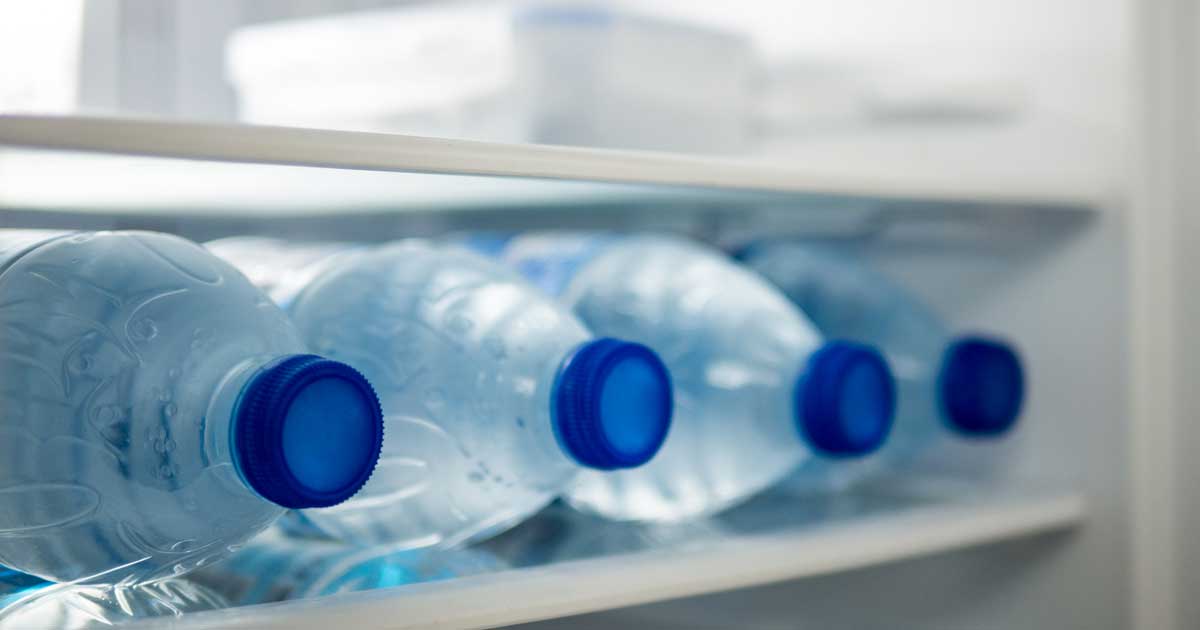
- Americans consume roughly 47.5 gallons of bottled water per person each year, driving over $50 billion in sales.
- Bottled water costs anywhere from $0.38 to over $4 per gallon versus the national average tap water cost of $0.008 per gallon.
- An under-sink reverse osmosis system produces water comparable to premium bottled water at $0.05 to $0.26 per gallon.
- RO removes contaminants including PFAS, lead, arsenic, nitrates, and disinfection byproducts that standard carbon filters and many bottled water products cannot guarantee are absent.
Americans drink so much bottled water. Big bottles, small bottles, and some the size of your head. The billions of gallons imbibed divide down to around 47.5 gallons per person, and that adds up to over $50 billion in sales. It's a lot of money, especially given the EPA puts the national average cost of municipal tap water at only $0.008 per gallon. So what's going on? A couple of things, really. The bottled water industry has successfully marketed its product as safer, cleaner, and better and many have bought into the idea. But what's also true is that many households have genuine water quality concerns and some are even dependent on bottled water for safety. But it's not the only solution. The choice between bottled water and reverse osmosis or other home filtration is worth examining.
Is Bottled Water Actually Safer Than Tap Water?
In truth, not necessarily, and not always. Municipal tap water is regulated by the EPA under the Safe Drinking Water Act, which mandates testing, public reporting, and enforceable maximum contaminant levels known in the biz as MCLs.
For a deeper look at what city water treatment actually removes and what it doesn't, see our guide on tap water safety and city water treatment.
Bottled water is regulated by the FDA under food safety standards that are similar to EPA limits, though they are less transparent and are subjected to less frequent testing. An uncomfortably high percentage of bottled water in the US is municipal tap water with varying levels of filtration. The number might be almost two-thirds and, according to the Environmental Working Group, most brands fail to disclose water source, purification, or testing because of the misconception that bottled is inherently better.
The more meaningful quality question, then, isn't bottled water versus tap water. The question you gotta ask yourself is what contaminants remain in either water source after treatment, and whether your household has specific concerns worth addressing.
PFAS, lead from aging pipes, disinfection byproducts, nitrates, and arsenic are present in some municipal supplies at levels that, while within legal limits, some households prefer to reduce further. Bottled water doesn't reliably solve this: FDA testing between 2023 and 2024 found detectable PFAS in 10 of 197 bottled water samples. The levels were below EPA maximum contaminant levels, but they were still present. And that's more meaningful knowing that limited 2016 testing detected none. (It's also worth acknowledging a Johns Hopkins-led study found PFAS substances in 39 out of 101 bottled waters tested back in 2021. And for households concerned about PFAS specifically, see our guide to PFAS water filters.)
The case for bottled water as a safety solution is shakiest in the single-serve plastic category, where microplastics are a documented concern. Studies have found tens of thousands of microplastic and nanoplastic particles per liter in bottled water.
What Does Bottled Water Really Cost You?
The per-gallon economics of bottled water look different depending on how you buy it.
Tap water runs about $0.008 per gallon nationally. Home reverse osmosis filtration produces purified water at roughly $0.05 to $0.26 per gallon when system cost and annual filter replacement are calculated from the unit's lifespan. That range covers everything from the least expensive under-sink systems to premium multi-stage models with a few of the bells and whistles.
Bottled water starts well above both options. Self-serve refill stations (the lowest-cost bottled water option) run $0.38 to $0.50 per gallon. Delivered 5-gallon jug service ranges from $1.20 to $4.00 per gallon. Single-serve cases, still a major purchase format at roughly 70% of bottled water volume, cost $1.78 to $2.89 per gallon at store-brand pricing.
Annualized for a family of five using 1.5 gallons of drinking and cooking water per person per day, independent research and All Filters' own household cost modeling tell a similar story. A 2018 study published in the journal Water Resources Research and cited by Daniel Jaffee in 2023 calculated the cost of replacing tap water with bottled water for a household's entire drinking and cooking needs at $983 to $4,757 per year (in 2015 dollars), figures that have only increased since. All Filters' 2026 household cost analysis, modeled on IBWA per-capita consumption data and current retail pricing, estimates annual bottled water costs for a family of five ranging from $425 to $528 for self-pickup refill jugs to $4,868 to $7,911 for single-serve cases. Those are eye-popping numbers just for a year, yet they quietly add up to thousands over a decade for bottle refills and tens of thousands for single-serve cases.
Home RO filtration over the same ten years? $500 to $2,600, including system cost and all replacement filters.
Why Reverse Osmosis Changes the Calculation
Reverse osmosis is the one residential filtration technology that directly addresses the reasons people reach for bottled water in the first place. An RO membrane filters water to 0.0001 microns to remove some 99% of dissolved solids, heavy metals, PFAS, nitrates, arsenic, fluoride, and disinfection byproducts that carbon-only filters such as refrigerator filters and most bottled water products don't consistently eliminate. Quality systems with remineralization stages add beneficial calcium and magnesium back after filtration, producing water that tastes like premium bottled spring water.
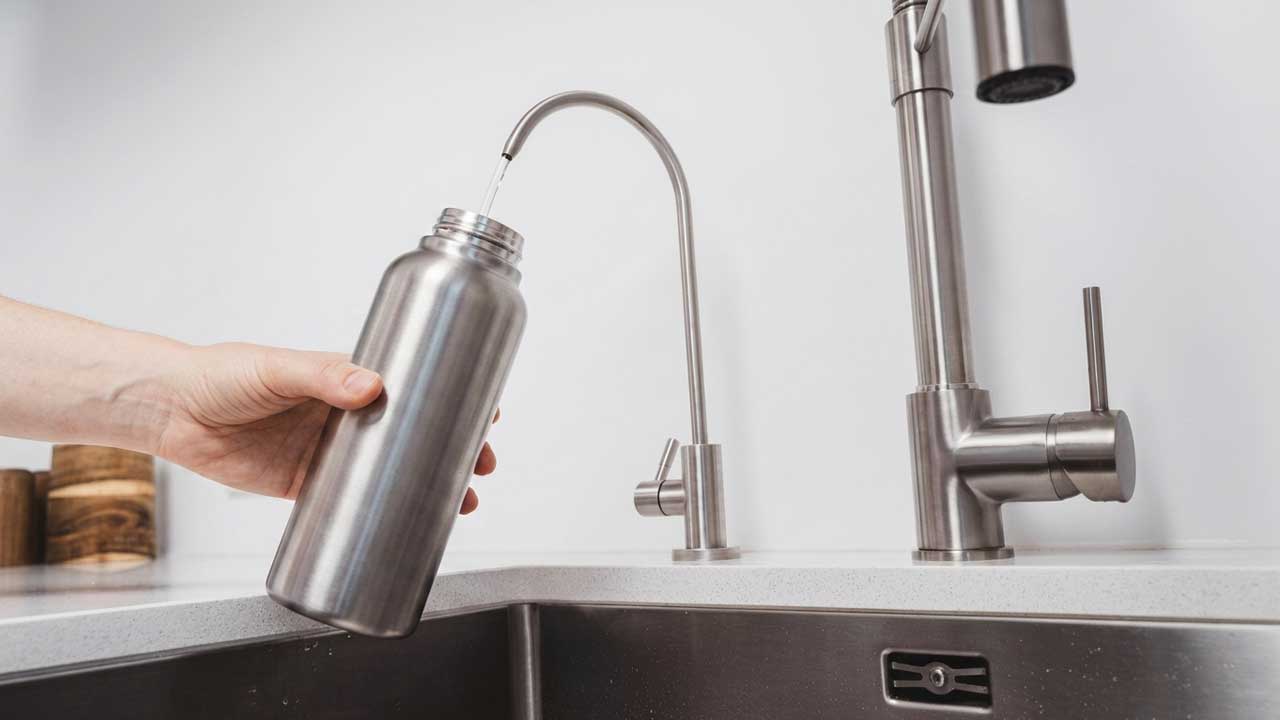
Under-sink reverse osmosis water filters have become genuinely accessible. A quality tankless system like the SpiroPure SP-RO1000TL installs in a cabinet under the sink, connects to a dedicated faucet, and operates without a storage tank, eliminating the pressure, refill time, and size of traditional RO. But homes on a budget can still get reliable RO water from a traditional tank-based system. For households comparing a tankless vs. tank RO system, the tradeoffs are modest and primarily practical rather than performance-related.
The ongoing cost of annual water filter cartridges and membrane replacement (often sold as sets) runs $100 to $200 per year for many under-sink systems. For a household currently spending even $50 per month on bottled water, the system wins on cost within a year. For households spending more, often considerably more, the math does its thing even faster (i.e. the math maths), and works even if filters are replaced more frequently.
Bottled water has its place, but as a permanent household water solution, it is expensive, inconsistent, and generates a lot of plastic waste and microplastic contamination. For most households who can absorb a modest upfront investment, reverse osmosis is the more economical, more reliable, and more sustainable answer to the question bottled water was never quite solving. Now on to the next problem: not leaving your refillable stainless steel bottle at the gym.
FAQs on Bottled Water vs. Reverse Osmosis
Is reverse osmosis better than bottled water?
Is bottled water safer than tap water?
What is the cost of bottled water per year for a family?
What does reverse osmosis remove that bottled water doesn't guarantee?
How much does a home reverse osmosis system cost to operate?
RELATED PRODUCTS

SpiroPure SP-RO100MP RO Filter System Under Sink 6-Stage with Remineralization
List Price: $277.26
Our Price: $138.63
Save: $138.63
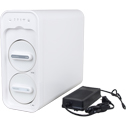
SpiroPure 1000 GPD Tankless RO System with Remineralization SP-RO1000TL
List Price: $656.94
Our Price: $328.47
Save: $328.47
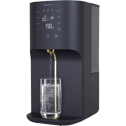
SpiroPure SP-RO500 Instant Hot Water Countertop RO with Remineralization
List Price: $399.48
Our Price: $199.74
Save: $199.74